An ASL Dictionary
Signing Savvy is a sign language dictionary containing several thousand high resolution videos of American Sign Language (ASL) signs, fingerspelled words, and other common signs used within the United States and Canada.And Much More!
Signing Savvy is an ideal resource to use while you learn sign language. It includes the ability to view signs, build word lists and share them with others, create digital flash cards and quizzes, view ASL sentences, get tutoring, ...and moreSign of the Day - STORY TIME
Signs That Are Close... But Not the Same — U.S. States
 Learning Tips
This article is part of our “Signs That Are Close... But Not the Same” series, which highlights signs that look similar, but have different meanings.
The ASL signs shown below look similar, but are not the same. There are many ASL signs that when produced look similar, but in fact have a completely different meaning. Below you will find examples of such signs. Watch closely to see if you can see the differences. In addition, watch my eyebrows, look to see when I tilt my head or lean my body in a certain way, even what my mouth is doing. These nuances are called inflections and trust me, inflections matter.
These examples are all U.S. state signs.
1. Alaska vs. Hawaii vs. Beautiful vs. Pretty vs. Face
ALASKA, HAWAII, BEAUTIFUL, PRETTY, and FACE all use the dominant hand near the face, however, different handshapes are used or different movements are added.
- ALASKA: Uses the dominant hand in the A handshape beginning at the non-dominant ear, then opens to a 5 handshape as it slides over the top of the head, then closes down again back to an A handshape at the dominant ear. To remember this sign, think of the fur on a hooded parka.
- HAWAII: Uses the H handshape, and ends near the center of the face, close to where you started the sign.
- BEAUTIFUL: Uses the 5 handshape, and ends by popping out in front of the face, from a flat O handshape, back to a 5 handshape.
- PRETTY: Also uses the 5 handshape, but ends in a flat O handshape near the chin.
- FACE: Uses the 1 handshape, ending near the forehead, close to where you started the sign.
 |
||
2. Arizona vs. Twin vs. Twin (another variation) vs. Restaurant vs. Cafeteria
This is another example where just using a different handshape changes the meaning of a sign. ARIZONA, TWIN (two variations), RESTAURANT, and CAFETERIA are all signs with the dominant hand starting on the non-dominant side of the chin and moving to the dominant side of the chin.
The handshapes used when signing each word are different. Think of the beginning letter of each word, or the number 2 for the 2nd TWIN variation when forming the signs:
- ARIZONA: A handshape. Think of A for Arizona.
- TWIN: T handshape. Think of T for twin.
- TWIN: 2 handshape. Think of 2 people being twins.
- RESTAURANT: R handshape. Think of R for restaurant.
- CAFETERIA: C handshape. Think of C for cafeteria.
|
||
3. California vs. Gold vs. Silver vs. Phone vs. Call vs. Why
CALIFORNIA, GOLD, SILVER, PHONE, CALL and WHY all have a similar movement with the dominant hand starting at the head and pulling away from the body.
- CALIFORNIA: Starts in the ILY or “I Love You” handshape and transitions into a Y handshape. It pulls down twice.
- GOLD: Starts in the ILY handshape, like CALIFORNIA, but pulls down farther while shaking into the Y handshape. This sign for GOLD is another sign that is also used to mean CALIFORNIA.
- SILVER: Starts in the 1 handshape then pulls down while shaking into an S handshape.
- PHONE: Starts in the Y handshape and pulls slightly away from the head, tapping twice on the side of your face, touching your mouth and ear. Think of the shape of an old phone receiver.
- CALL (as in "to call someone by phone"): Uses the Y handshape starting at the face and moving away from the body in one long gesture.
- WHY: Starts in the 5 handshape beginning at the forehead, and pulls down into a Y handshape. Think of a thought coming from your mind.
|
||
4. Colorado vs. Color vs. Hot (as in "spicy hot") vs. Hot (as in "temperature hot") vs. Friendly vs. Cool (as in "weather or low temperature")
COLORADO, COLOR, HOT (as in "spicy hot") and HOT (as in "temperature hot") all use the dominant hand beginning near the mouth or chin with the palm facing inward. The motion following and the handshape differs. FRIENDLY and COOL (as in "weather or low temperature") both use two hands just above the chest. Similar to the other signs, the palms are facing inward.
- COLORADO: The fingers wiggle in front of the mouth to sign COLOR, and then the hand moves in front of the chest to sign A-D-O.
- COLOR: The dominant hand in the 5 handshape, with fingertips touching the chin and wiggling, just as in the beginning of COLORADO.
- HOT (as in "spicy hot"): Begins with the palm in the C handshape facing the mouth, fingers slightly apart. The hand moves out and away 3 times. Think of flames shooting out of your mouth.
- HOT (as in "temperature hot"): Begins the same as "spicy" HOT with the C handshape palm facing the mouth. However instead of moving out and away 3 times, the hand moves outward just once, remaining with palm outward. Think of sipping a hot drink too soon and heat escapes your mouth.
- FRIENDLY: Both hands are in the 5 handshape just above the chest, palms inward, and both hands move up and outside of the face while fingers make a fluttering motion. Think of someone with a big smile radiating outward.
- COOL (as in "weather or low temperature"): Hands are in the open B handshape with palms facing the body. Hands stay in place while making a waving motion toward the face. Think of fanning yourself while trying to cool down.
|
||
5. New York vs. Subway vs. Practice vs. Wash (as in "washing a surface") vs. Train (as in, "the form of transportation") vs. Movie
NEW YORK, SUBWAY, PRACTICE, WASH, TRAIN, and MOVIE begin with two hands together in front of the body, but the movements and handshapes make each sign different.
- NEW YORK: Uses a similar sign to SUBWAY, but inverts the sign. For NEW YORK, the non-dominant hand is upward in the open B handshape while the dominant hand in the Y handshape slides back and forth, with knuckles down on the upturned non-dominant palm. Remember to use the sign for SUBWAY, but turned over.
- SUBWAY: The non-dominant hand extends palm down with the dominant hand in the Y handshape palm up, with knuckles sliding back and forth under the extended palm above. Think of subways running underground in New York.
- PRACTICE: The non-dominant hand is in the 1 handshape with palm facing inward. The dominant hand in the A handshape, palm down, brushes back and forth across the non-dominant finger. Think of smoothing off the rough edges.
- WASH (as in "washing a surface"): This sign is very similar to NEW YORK with the dominant hand brushing across the non-dominant open B handshape below it. However, with WASH, the dominant hand is in the A handshape (not Y) and makes more of a scrubbing motion. Think of how you would rub a surface to get it clean.
- TRAIN (as in, "the form of transportation"): Both hands in the U handshape. The non-dominant palm faces downward, dominant fingers facing downward are on top of the non-dominant fingers and slide forward and back two times. Think of railroad tracks and the railroad cars running on them.
- MOVIE: Non-dominant hand in the five handshape, palm facing your body, arm held horizontally. Dominant hand in the 5 handshape, palm facing forward. The bottom of the dominant hand touches the top of the palm of the non-dominant hand and waves back and forth. Think of the flickering of a film reel running in front of a projector.
|
||
6. Texas vs. Detroit vs. Indianapolis vs. Rochester vs. Philadelphia vs. Kalamazoo vs. Flint vs. Chicago
Pay close attention to the different handshapes for the signs TEXAS, DETROIT, INDIANAPOLIS, ROCHESTER, PHILADELPHIA, KALAMAZOO, FLINT and CHICAGO. The hand motion is the same across all of these destinations, with the dominant hand moving across the body to the dominant side, and downward ending with the palm facing down. This makes the shape of the number 7 in the air. Note that this movement is common for signing many cities, with changing the first initial. The differing handshapes is the key to recognizing and signing the correct place.
- TEXAS: X handshape. X is the middle letter of the state of Texas.
- DETROIT: D handshape. Think of D for Detroit.
- INDIANAPOLIS: I handshape. Think of I for Indianapolis.
- ROCHESTER: R handshape. This of R for Rochester.
- PHILADELPHIA: P handshape. Think of P for Philadelphia.
- KALAMAZOO: K handshape. Think of K for Kalamazoo .
- FLINT: F handshape. Think of F for Flint.
- CHICAGO: C handshape. Think of C for Chicago.
|
||
7. Texas vs. Need vs. Phoenix
TEXAS, NEED and PHOENIX all use the dominant hand in the X handshape, but the hand movements are different.
- TEXAS: As mentioned above, the dominant hand is in the X handshape moving across the body to the dominant side, and downward ending with the palm facing down. The arm movement makes the shape of the number 7.
- NEED: The arm is kept stationary, but the hand with palm face down in the X handshape, bounces up and down two times.
- PHOENIX: Very similar to NEED, but has the palm facing forward (not downward) in the X handshape. The X bounces twice in the air. Think of the X in the word PHOENIX.
|
||
8. Washington vs. Oregon vs. Cadillac (as in, "the car") vs. Boss
WASHINGTON, OREGON, CADILLAC, and BOSS all begin with the fingertips of the dominant hand touching the top of the dominant shoulder. The handshapes and motions distinguish the sign.
- WASHINGTON: The W handshape is used and moves away from the shoulder in a circling motion outward. Think of the epaulets on a uniform.
- OREGON: The regional version uses the O handshape and moves out from the shoulder in a circling motion. It is intentionally signed like the sign for the state of WASHINGTON, but with the O handshape signifying OREGON.
- CADILLAC (as in, "the car"): Dominant hand in the C handshape, palm faces body, thumb of the dominant hand touches the dominant shoulder then hand moves away in two circular movements. Think of the first letter of the word CADILLAC for the handshape of the dominant hand.
- BOSS: The dominant hand is in the bent 5 handshape, palm facing down, and the hand taps the shoulder two times without extending. Think of military shoulder bars representing authority.
|
||
9. West Virginia vs. Virginia vs. West vs. Wednesday vs. Right (as in "the direction")
WEST VIRGINIA, VIRGINIA, WEST, WEDNESDAY and RIGHT (as in "the direction") all begin by using the dominant hand signing a letter near the dominant side of the body. Watch for differences in the handshape as well as any motion, since WEST VIRGINIA, WEST and RIGHT use a sliding motion, and WEDNESDAY makes a circular motion.
- WEST VIRGINIA: Begin with the dominant hand in the W handshape making a sliding motion to the dominant side of the body, where the letters V-A are then fingerspelled. Think of using the sliding W for WEST and the V-A for VIRGINIA.
- VIRGINIA: Fingerspell V-A, using the common postal abbreviation.
- WEST: Use the W handshape with the hand sliding in front of the torso from the dominant side to the non-dominant side of the body. Think of its first letter and direction on a map.
- WEDNESDAY: The hand is in the W handshape with palm facing inward, and makes a small circular counterclockwise movement. Think of W for Wednesday, and the concept of a day being a cycle.
- RIGHT (as in "the direction"): The right hand is in the R handshape, palm forward, and slides to the right.
|
||
How can I figure out the difference between signs on my own?
If you see two signs that look close, but not the same, and you’re not sure, you may use Signing Savvy features to help you figure out the difference. All of our signs have sign descriptions and memory aids that members may access. Reading the sign description and memory aids for the signs will help you figure out the small differences between them that your eyes don’t catch at first. We also recommend using the pause and slow motion feature to slow down the video, so you may take a closer look. These features are available to Signing Savvy members.
View/Add Comments (0 comments)
About the Author
 Brenda Cartwright is a seasoned interpreter, a master teacher, well known presenter, and author of several best selling sign language and interpreting textbooks from the RID Press. For 35 years Brenda was the Chair of the Sign Language Interpreter Program at Lansing Community College in Lansing, Michigan.
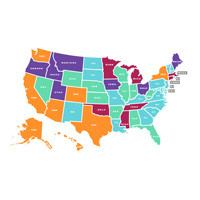 Signing U.S. States in ASL
 Signs That Are Close... But Not the Same — Family
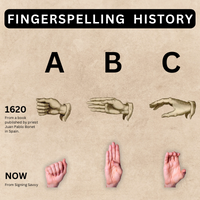 Fingerspelling History
Signing Savvy Promotions